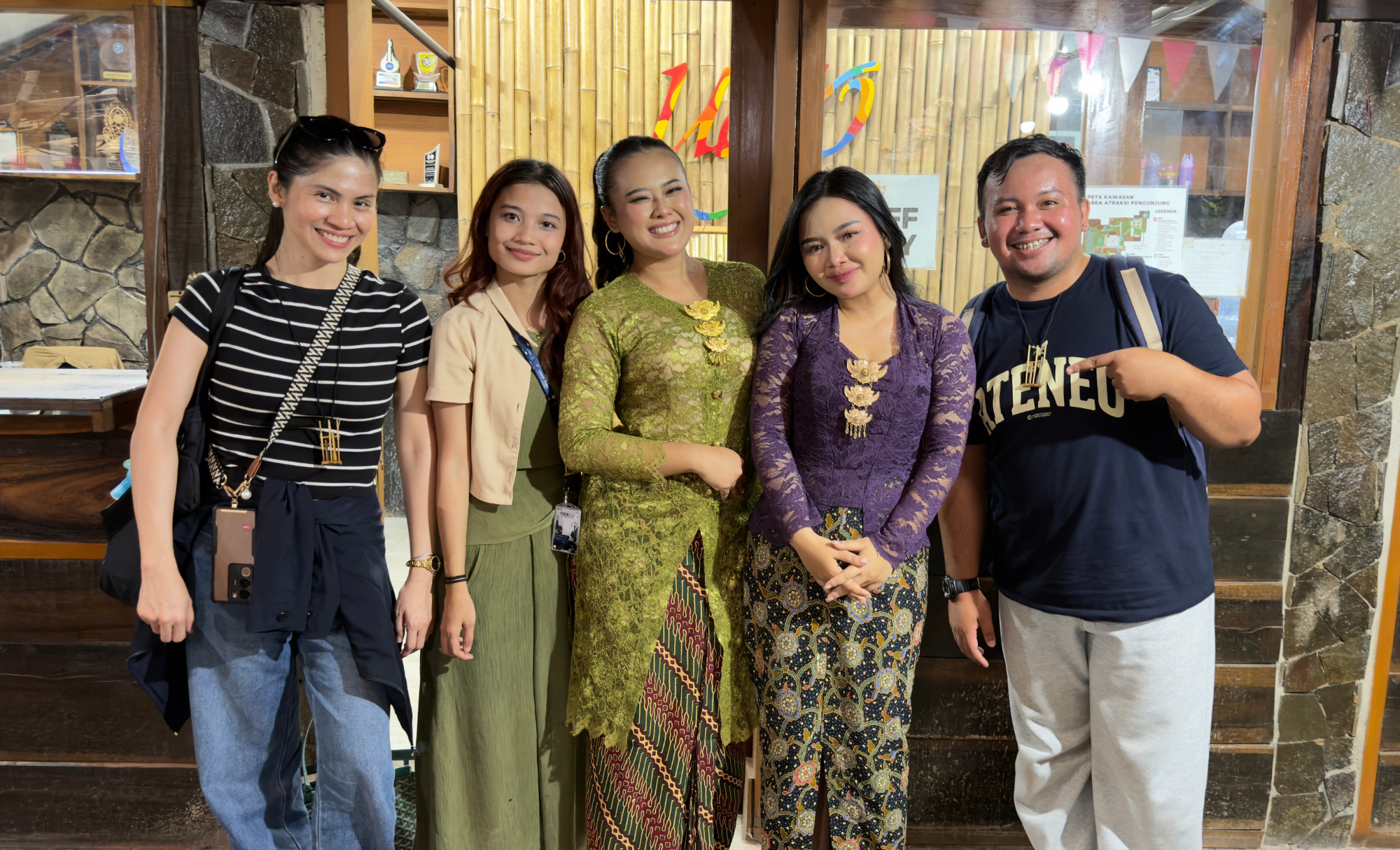
The Ateneo de Davao University (ADDU) joined the 4th UNISBA Global Student Motion (UGEO) 2026, hosted by Universitas Islam Bandung (UNISBA), Indonesia, from 24-28 August 2026.
The international program invited student leaders, educators, and scholars from different countries for academic exchange, cultural immersion, and collaborative discussions centered on the United Nations Sustainable Development Goals (SDGs).
The participants from ADDU were Ms. Trisha Jean Acabal, a 2nd-year Bachelor of Secondary Education major in Social Studies student, and Mr. Javen Jake Deluao, a 4th-year Bachelor of Public Management student. They were accompanied by Ms. Karen Anne E. San Pedro, MEd, MAEd, Chairperson of the Teacher Education Program, School of Education.
The program focused on three Sustainable Development Goals: SDG 4 on Quality Education, SDG 10 on Reduced Inequalities, and SDG 11 on Sustainable Cities and Communities. Through lectures, discussions, and collaborative activities, participants examined access and equity in education, respect for diversity, and the development of inclusive and sustainable communities.
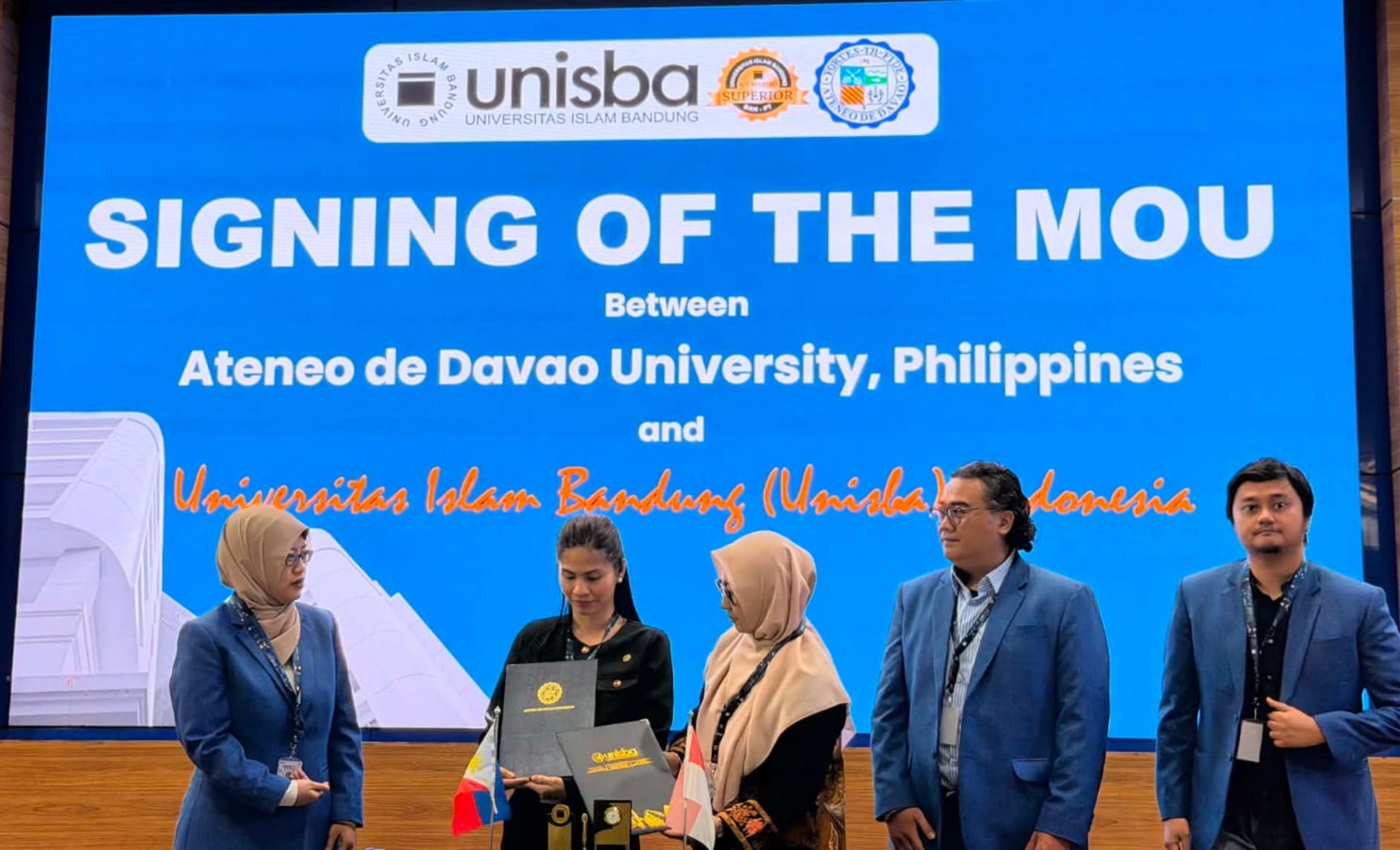
The opening day also marked an important milestone in the growing partnership between ADDU and UNISBA. Ms. San Pedro represented Ateneo de Davao University in the signing of a Memorandum of Understanding with Universitas Islam Bandung, together with Prof. Ratna Januarita, S.H., LL.M., M.H., Vice Rector of Alumni Affairs and Partnership.
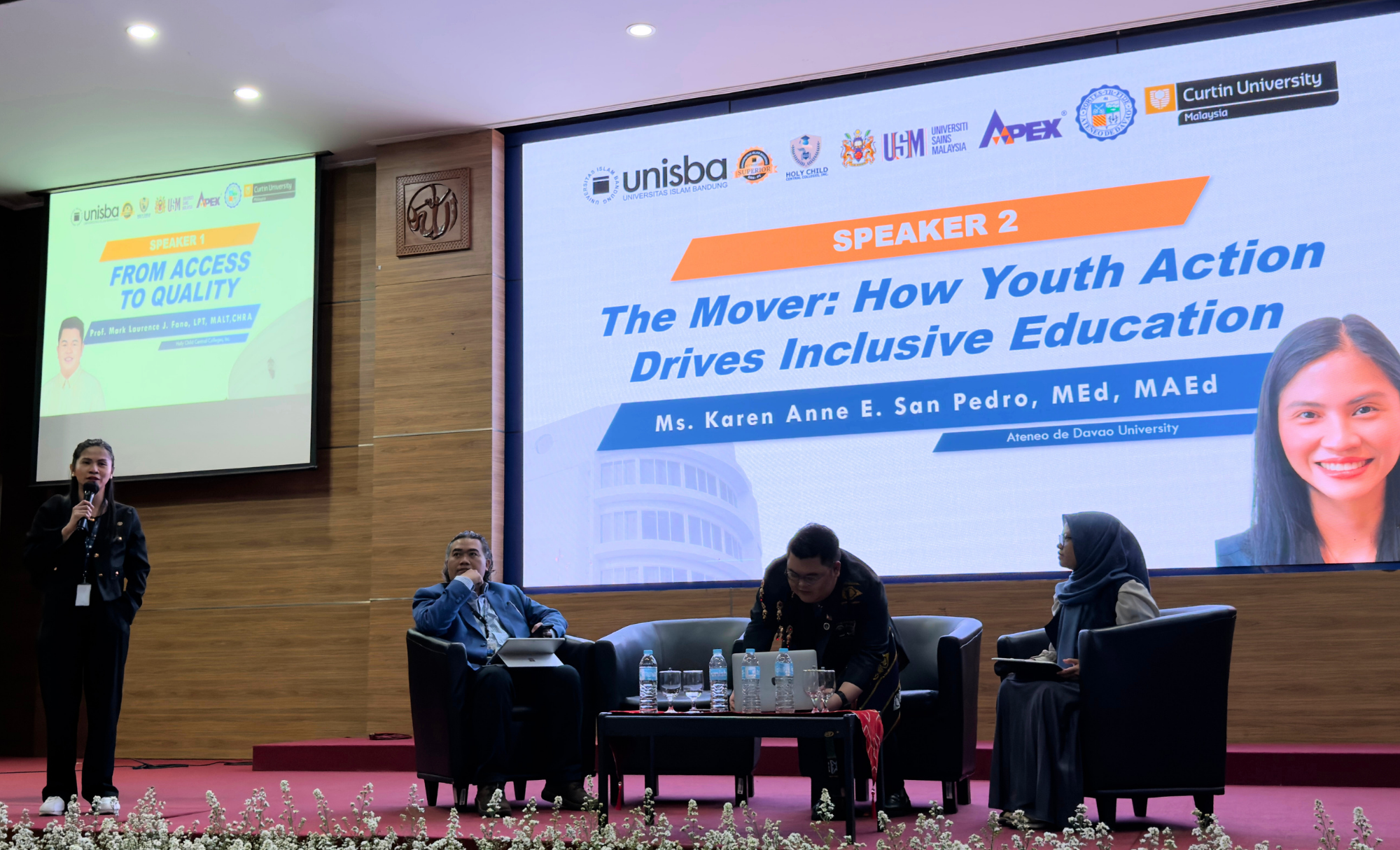
Beyond accompanying the students, Ms. San Pedro also contributed to the academic component of UGEO 2026 as one of the guest lecturers under SDG 4: Quality Education. Her presentation, “The Mover: How Youth Action Drives Inclusive Education,” focused on the role of young people in creating more inclusive learning environments.
“Youth must be active participants, not passive observers, in shaping educational practices that foster inclusivity within classrooms, school communities, and broader learning environments,” Ms. San Pedro shared.
Her discussion presented three spaces where young people can contribute to inclusive education: the immediate environment, which includes classrooms and personal learning spaces; the community environment, which covers schools and local networks; and the glocal environment, where global ideas and perspectives are applied within local contexts.
International student delegates from the Philippines, China, Sri Lanka, Malaysia, Egypt, Somalia, and Palestine contributed different experiences and perspectives to the discussions, adding depth to conversations on education, inequality, and sustainable communities.
Outside the formal academic sessions, participants experienced Indonesian culture and campus life through a tour of UNISBA’s facilities, including its library, mosque, student activity center, and Al Biruny Observatory. Cultural exchange activities included batik-making workshops and an angklung performance, giving participants an opportunity to experience traditional Indonesian textile-making and Sundanese musical heritage.
Participants also worked together in focus group discussions on SDGs 4, 10, and 11, where they developed proposed responses to challenges related to education, inequality, and sustainable urban development. These sessions allowed delegates to compare shared concerns across countries while bringing different cultural and academic perspectives into the conversation.
The program extended beyond the campus through outdoor networking activities in Pangalengan. Team-building exercises, off-road driving, rafting, and other group activities gave participants additional opportunities to work together, build friendships, and strengthen connections across institutions and nationalities.
UGEO 2026 concluded with the presentation of focus group outputs, cultural performances by student delegates, and the awarding of certificates. The closing activities brought together the academic and intercultural dimensions of the program and reflected the relationships formed among participants throughout the week.
For faculty, the program likewise created opportunities to strengthen academic networks and institutional partnerships while contributing to international conversations on education and social development.
“The 4th UNISBA Global Student Motion proved to be more than an academic gathering; it was a transformative platform for building international networks, fostering intercultural understanding, and addressing pressing global challenges,” Ms. San Pedro wrote in her report.
For the ADDU delegation, the 4th UNISBA Global Student Motion 2026 became more than an international academic gathering. Through lectures, cultural encounters, collaborative discussions, and new institutional connections, the experience encouraged participants to see how global conversations on education, equality, and sustainability can be translated into meaningful action within their own communities.
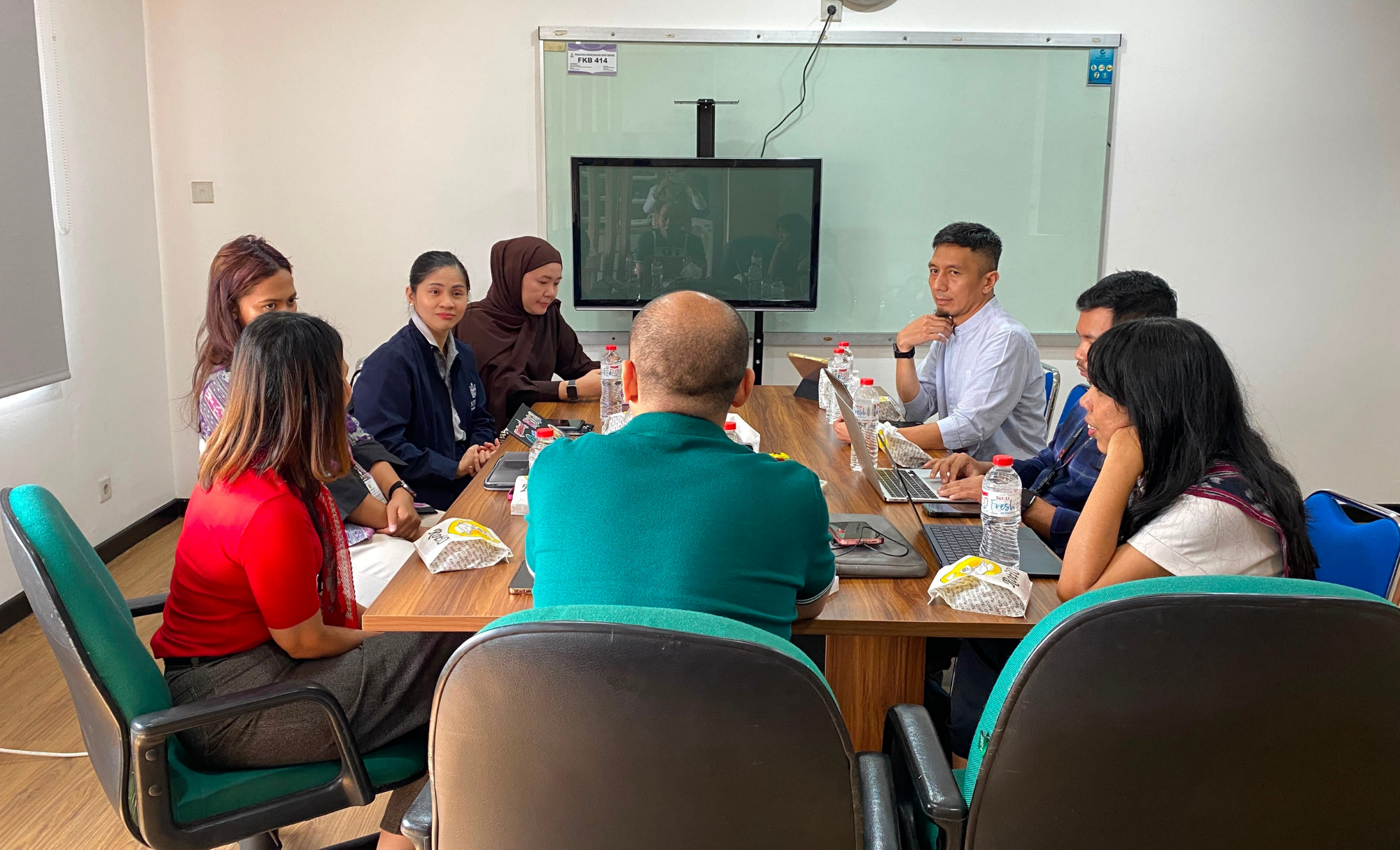
Aside from the participation in UNISBA, Ms. San Pedro also visited our partner institution, Telkom University, where she met faculty and academic administrators to explore possible collaborations in guest lectures, Collaborative Online International Learning (COIL), joint research, and community engagement, with the ADDU School of Education.
ADDU’s participation in these international engagements was supported by the University’s Global Citizenship Fund (GCF).