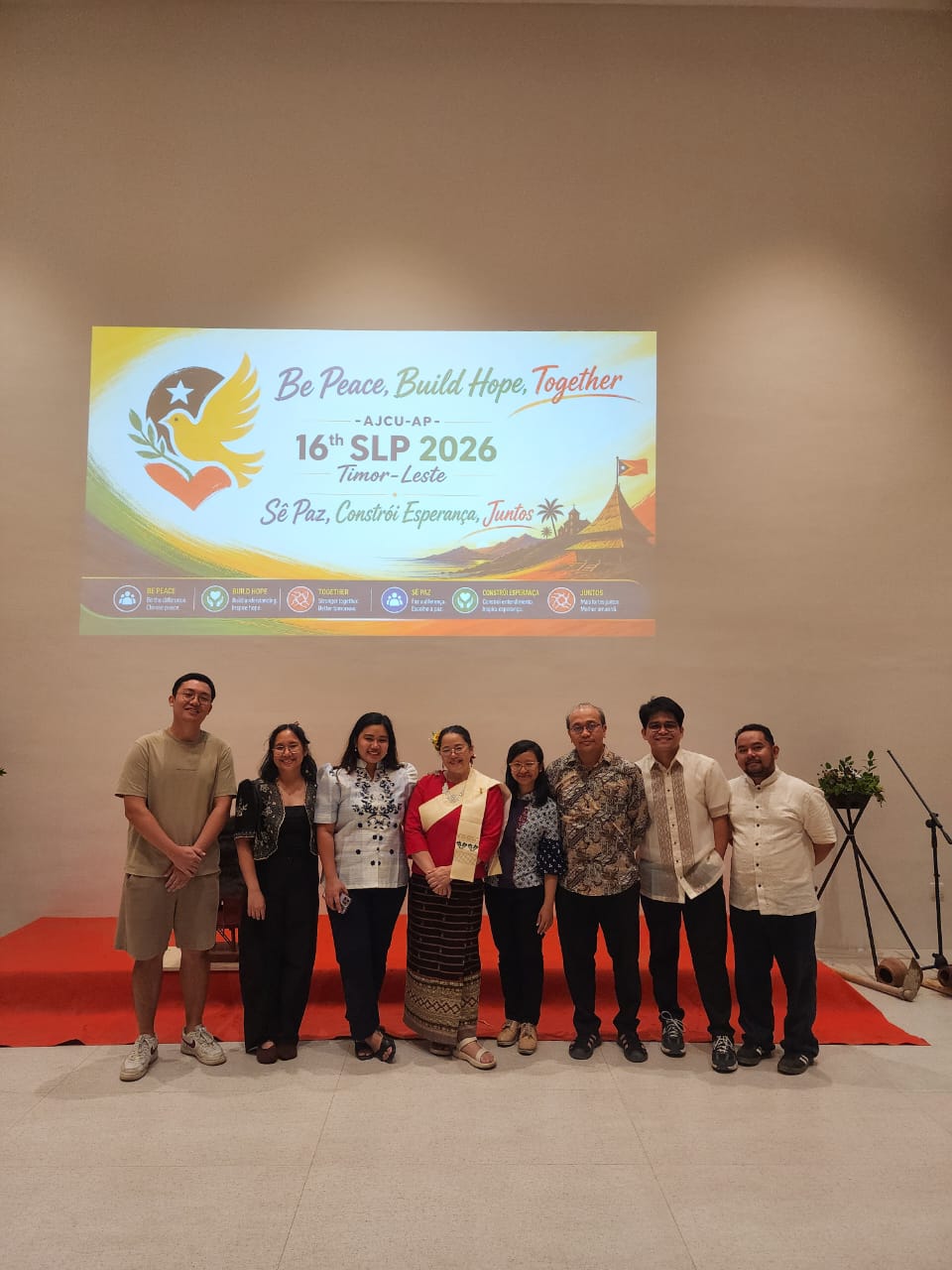
The 16th Association of Jesuit Colleges and Universities in Asia Pacific Service-Learning Program 2026 (AJCU-AP SLP) gathered students and faculty from Jesuit institutions across the Asia Pacific in Timor-Leste from 2 -16 August 2026. With the theme, “Peace and Reconciliation: A Perspective of Post-Conflict Country Experience,” the program, hosted by Instituto São João de Brito (ISJB), invited participants to learn from Timor-Leste’s journey through conflict, independence, nation-building, and reconciliation.
Representing Ateneo de Davao University (ADDU) were Ms. Rogelle P. Pesidas, an AB International Studies major in Asian Studies; Mr. Rexen Jhon F. Suaybaguio, a BS Chemistry student; and Mr. Annan F. Hamdain, a BS Social Work student. They were accompanied by Ms. Jhana Lynne B. Ligue, Program Coordinator of the Arrupe Office of Social Formation.
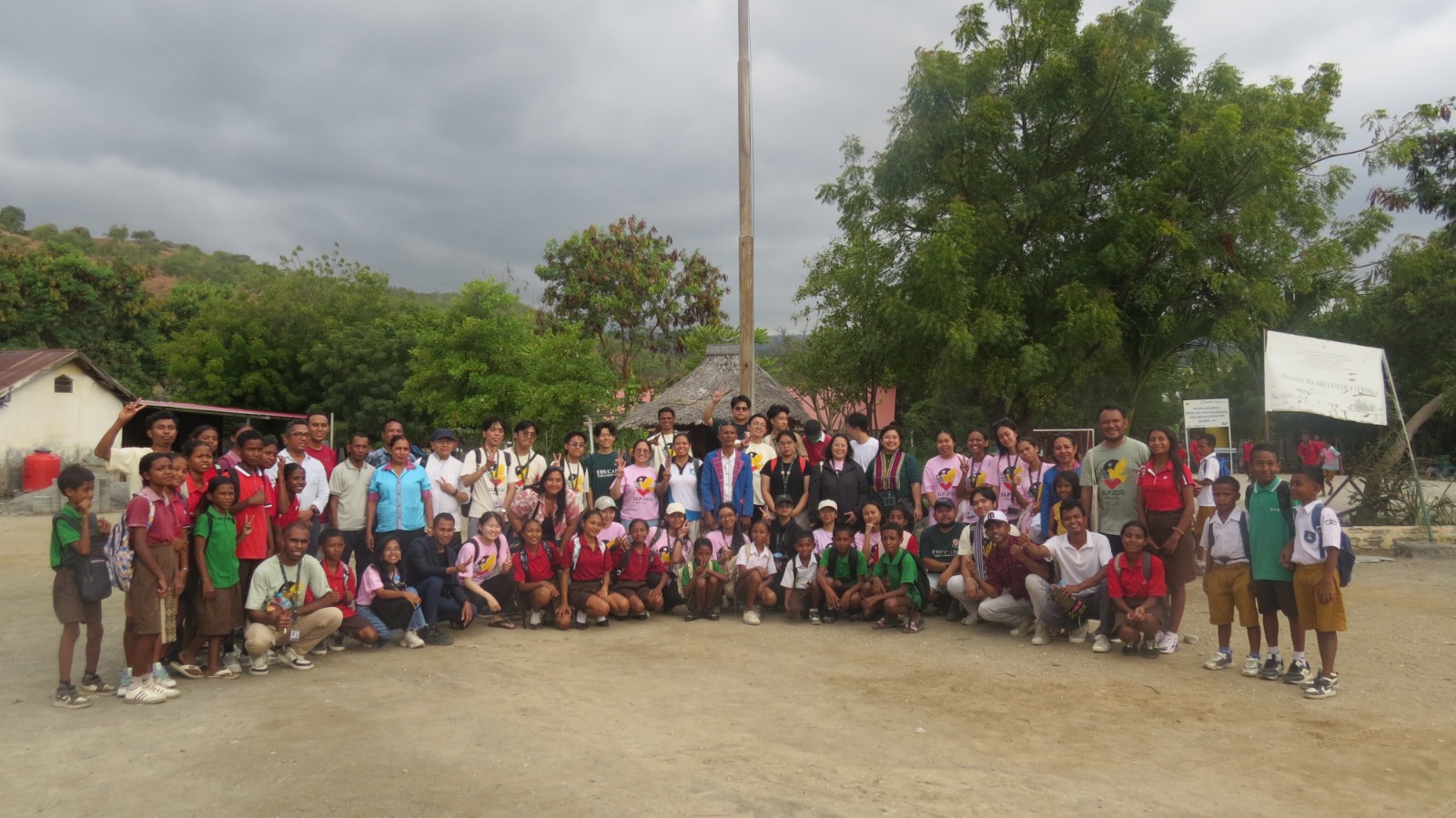
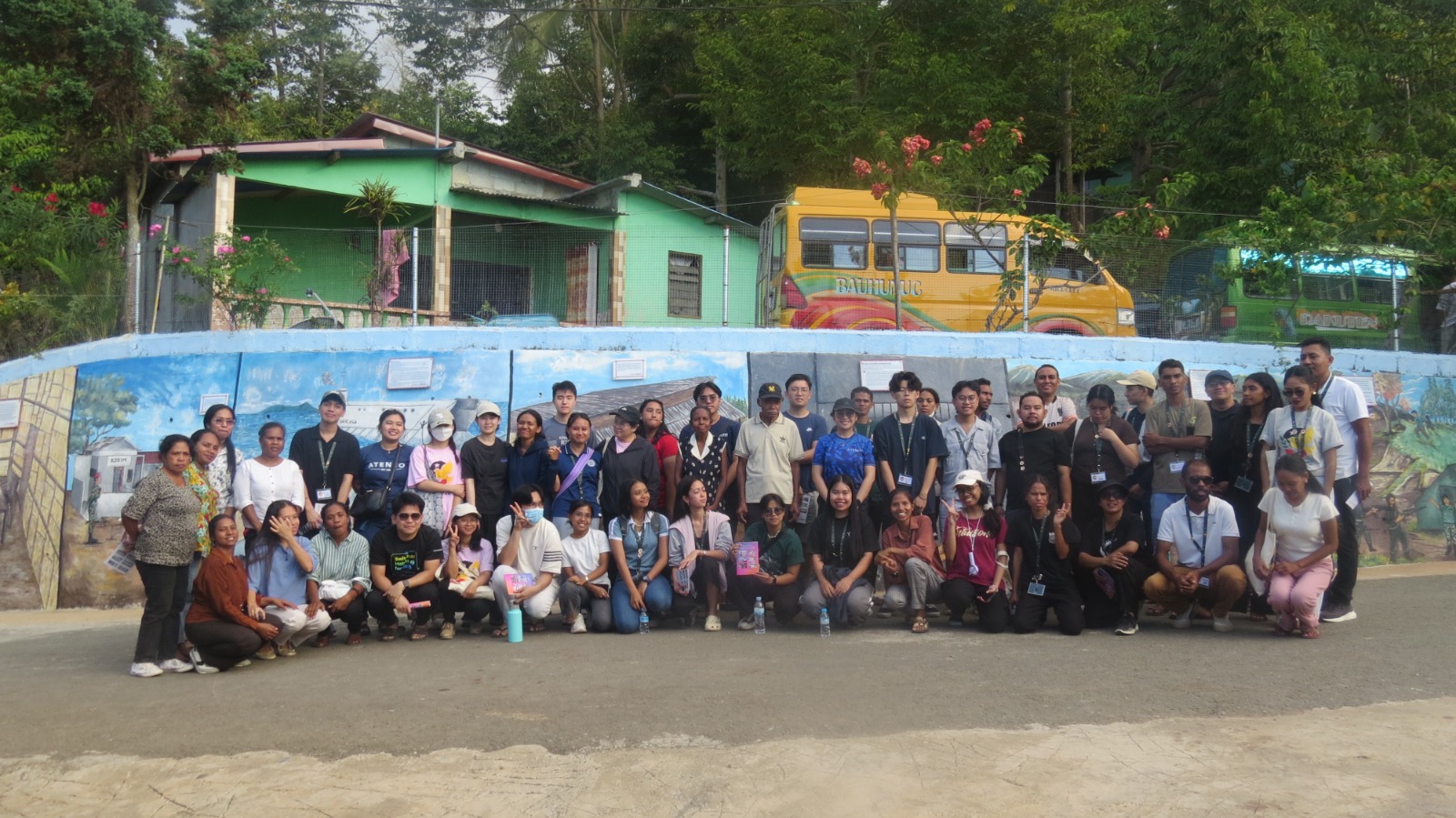
Throughout the two-week program, participants engaged in community encounters, intercultural dialogue, and guided reflections on the realities of peace and reconciliation in a post-conflict society. The program created opportunities to meet communities whose lives continue to carry the legacies of conflict, including survivors of violence, rural and urban communities, youth, women, and Indigenous groups. Through these encounters, participants reflected on justice, memory, solidarity, and the relationships that sustain peace across generations.
The experience placed participants within the historical and social context of Timor-Leste, a country shaped by decades of colonial rule, occupation, violence, and the continuing work of rebuilding after conflict. Alongside these difficult histories, participants also encountered local practices of peacebuilding rooted in community, faith, and tradition. These spaces invited them to consider how the lessons of Timor-Leste could speak to the realities of their own countries and communities.
To Remember, To Be Present: Reflections from Timor-Leste
By Ms. Jhana Lynne B. Ligue
AJCU-AP SLP 2026 Faculty Companion
OIC Coordinator – Volunteers and Leaders Organizing and Formation
Arrupe Office of Social Formation
I entered the SLP 2026 as a formator tasked to accompany students, and left it having been formed myself. I wrote this carrying three overlapping identities as a Filipino, a formator, and someone simply present and attentive. Two lessons stayed with me: the power of remembering and the grace of presence.
The Power of Remembering for Peacebuilding
As a Filipino, Timor-Leste’s story is not mine, but I kept recognizing pieces of it as though I had lived them before. Well, in a sense, my country, the Philippines, had. Colonization, violence, and independence: these are not foreign concepts to a Filipino. Mr. João Boavida said, “Peace becomes possible when people collaborate and come together in building it.”
His words renewed in me the lesson on how peacebuilding can never be a top-down process: it must be grounded and communal. With this, I sensed a kind of oneness with the Timorese people: we are not that different from them; we simply experienced these things earlier.
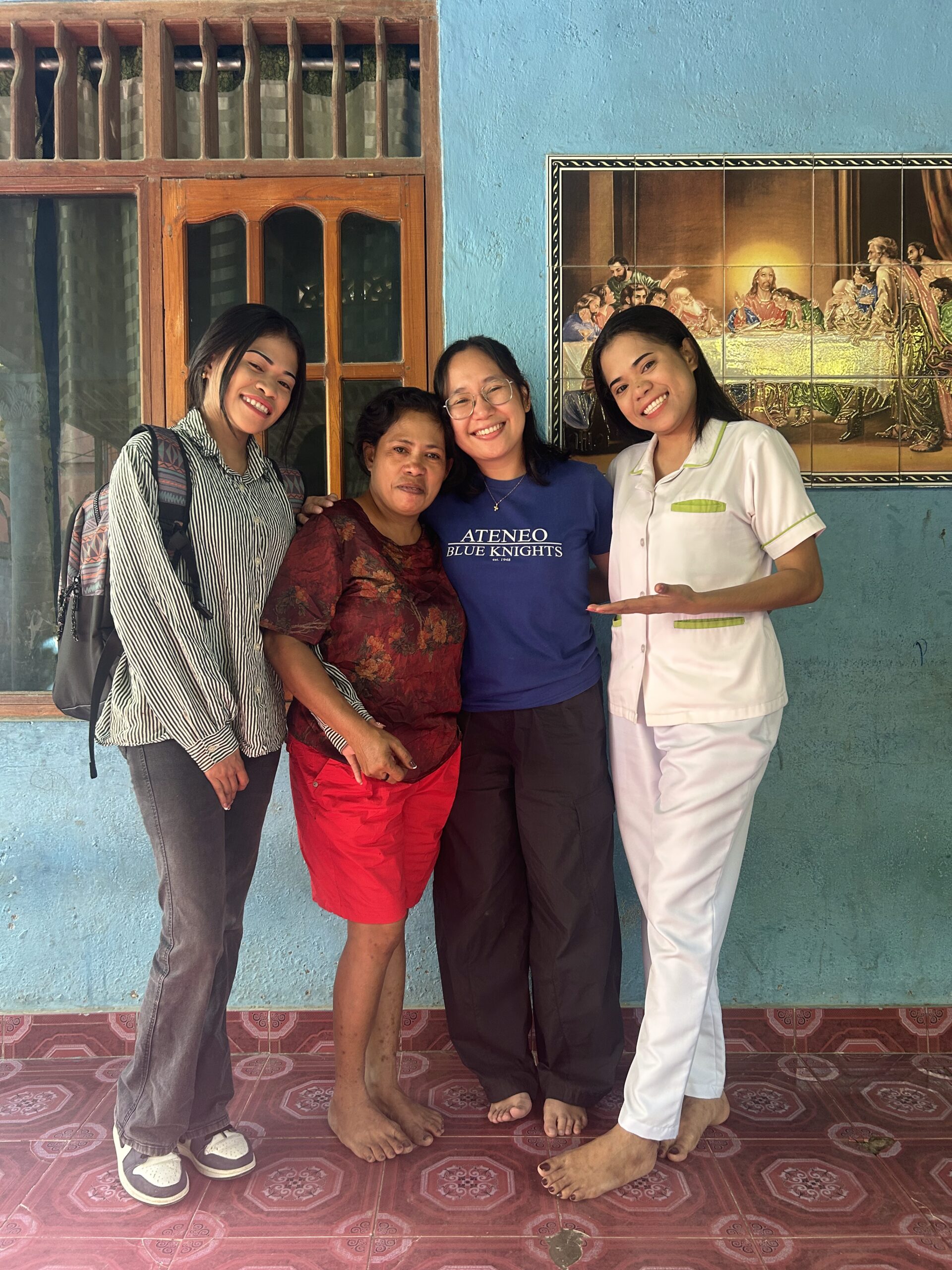
Most notably, the deepest lesson on remembering came from a person, not a talk: my foster mother during community exposure, Inang Micaela. Her story, and the stories of Timorese women like her, left me with something: never forget East Timor, and the story of its people.
We often say the past is the past. However, it lingers more than we can comprehend. It shaped the present, and will shape the future. To recognize history is to preserve the dignity of those who helped build the society we live in today. Remembering is not a passive act. It is an active practice of peacebuilding.
The Grace of Intentionality and Presence
As a formator, the second lesson invited me to reflect on how I was showing up for the students I was with. I felt called to nurture that space for everyone, and it slowly clarified into something specific: presence is powerful. Not words or just actions, but simply being there, attentively, for the young students entrusted to our care.
Sr. Guilhermina Marçal, FdCC, named the quiet foundation of this grace: “People are most important, not
political issues.”
Her words helped me reframe my understanding of my role and of our social formation ministry.
Advocacies do not exist in a vacuum, and putting people first reminds us of the deeper purpose we pursue them: I was not there to simply chaperone but to be present for the students and the communities
who welcomed us, as people first. This is also where I relearned that recognizing trauma and pain matters more than we can ever imagine.
I left Timor-Leste as a Filipino carrying a deep kinship with a people whose history resonates with my own, and as a formator entrusted with students who were only ever mine to journey with, never to hold. As I carry on my ministry here in Davao, I am renewed with this lesson: remembering is how peace is built across generations, and presence is how it is built across people, one relationship at a time.
ADDU’s participation in this international program was supported by the University’s Global Citizenship Fund (GCF).