
The Ateneo de Davao University (ADDU) conducted the SPARK-COIL Training: Igniting Global Connections in the Digital Classroom on 24 July 2026 via Zoom video conference.
The training is part of Work Package 4: Replication of Training under the SPARK-COIL (Strengthen and Promote Academic Agility, Resilience, and Knowledge Exchange through Collaborative Online International Learning) Project, an Erasmus+ Capacity Building in Higher Education initiative that supports the integration of Collaborative Online International Learning (COIL) across partner institutions in the Philippines and Europe.
The training was open to faculty members (from basic education to higher education) from Ateneo de Davao University and invited HEIs in Region XI, Region XII, the Bangsamoro Autonomous Region in Muslim Mindanao (BARMM), and other regions.
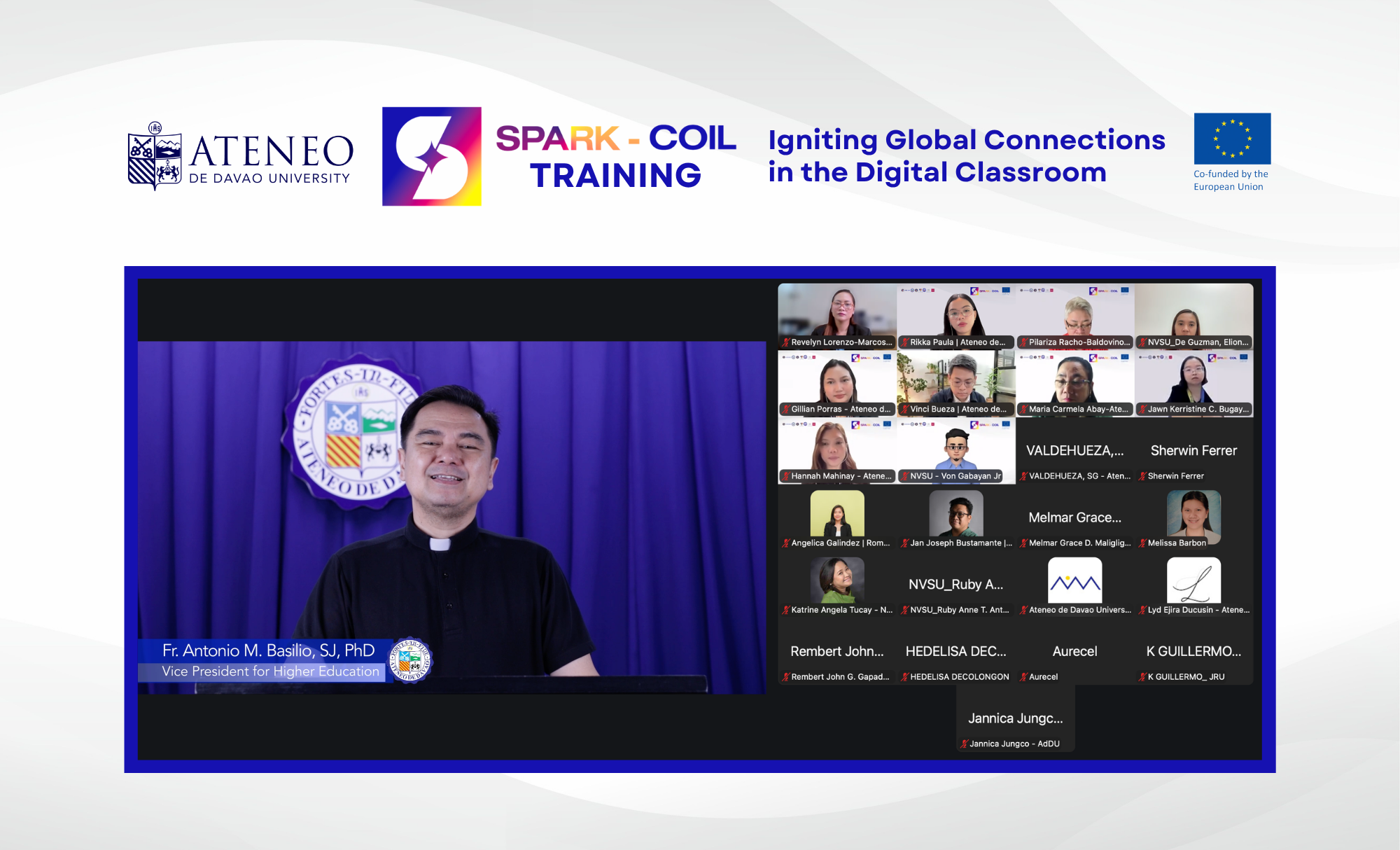
The regional training was formally opened by Fr. Antonio M. Basilio, SJ, Vice President for Higher Education of Ateneo de Davao University, who challenged participants to see COIL not merely as a program to learn about, but as an opportunity to act on. He acknowledged the importance of collaboration in higher education and encouraged those present to make full use of what the training offered in building meaningful international engagement and intercultural exchange.
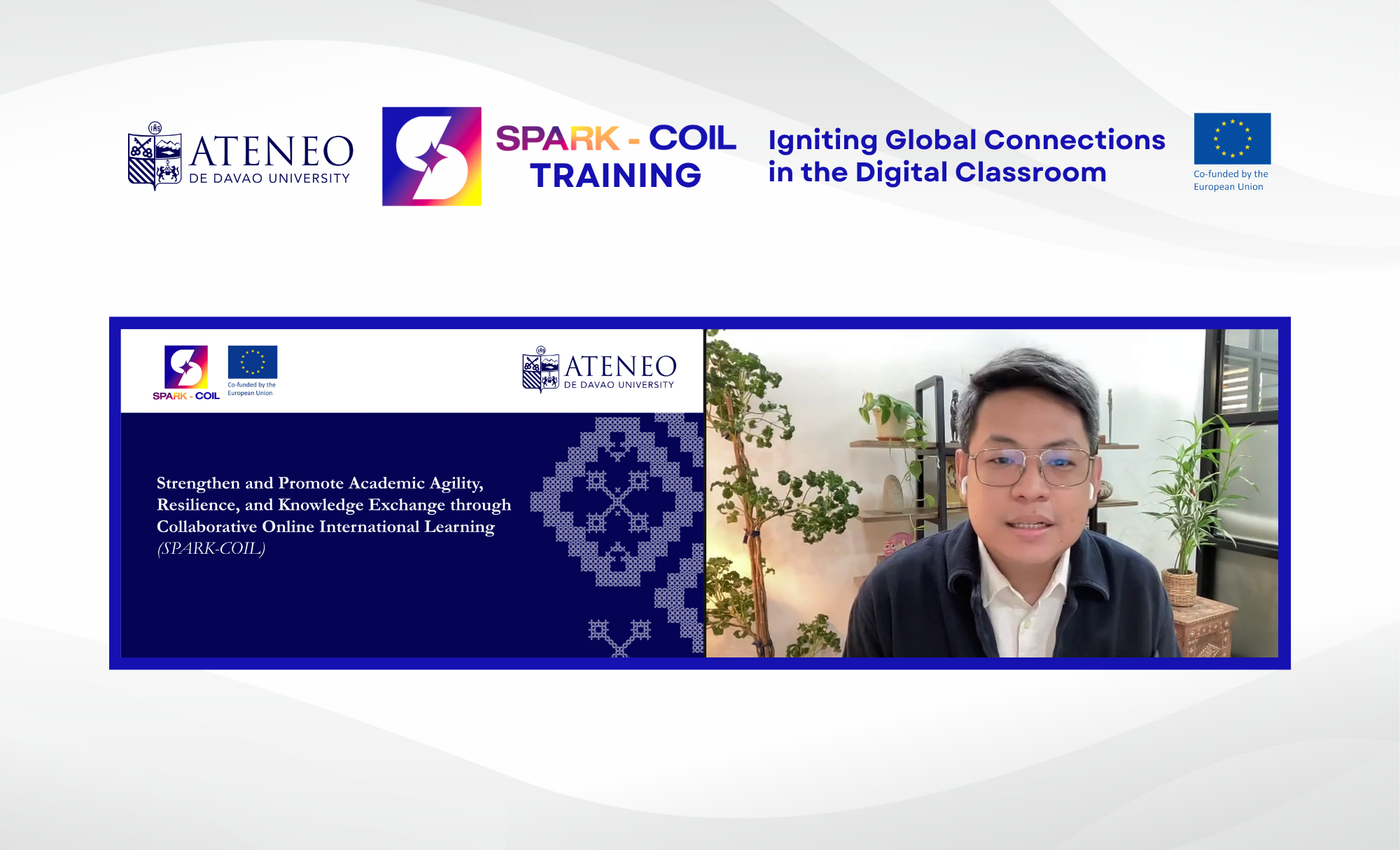
Mr. Romulo Vinci R. Bueza, Executive Assistant to the President and Director of the Ateneo Internationalization for Mindanao (AIM) Office, followed with an introduction to the SPARK-COIL Project, situating the training within the Erasmus+ initiative and ADDU’s role as an implementing partner.
What followed was a full day of learning designed to take participants step by step through every dimension of COIL, from understanding the concept to building the tools needed to implement it.
Designed as a practical learning experience, the training equipped participants with the knowledge, skills, and tools needed to design, implement, and monitor COIL-enhanced courses. It also promoted intercultural competence, collaboration, and innovation in teaching while supporting the development of academic networks among institutions.
The training used an interactive and participant-centered approach to encourage active engagement throughout the day. Participants joined breakout room discussions, completed group workshops, examined case scenarios, and reflected on practical strategies for applying COIL in their own classrooms.
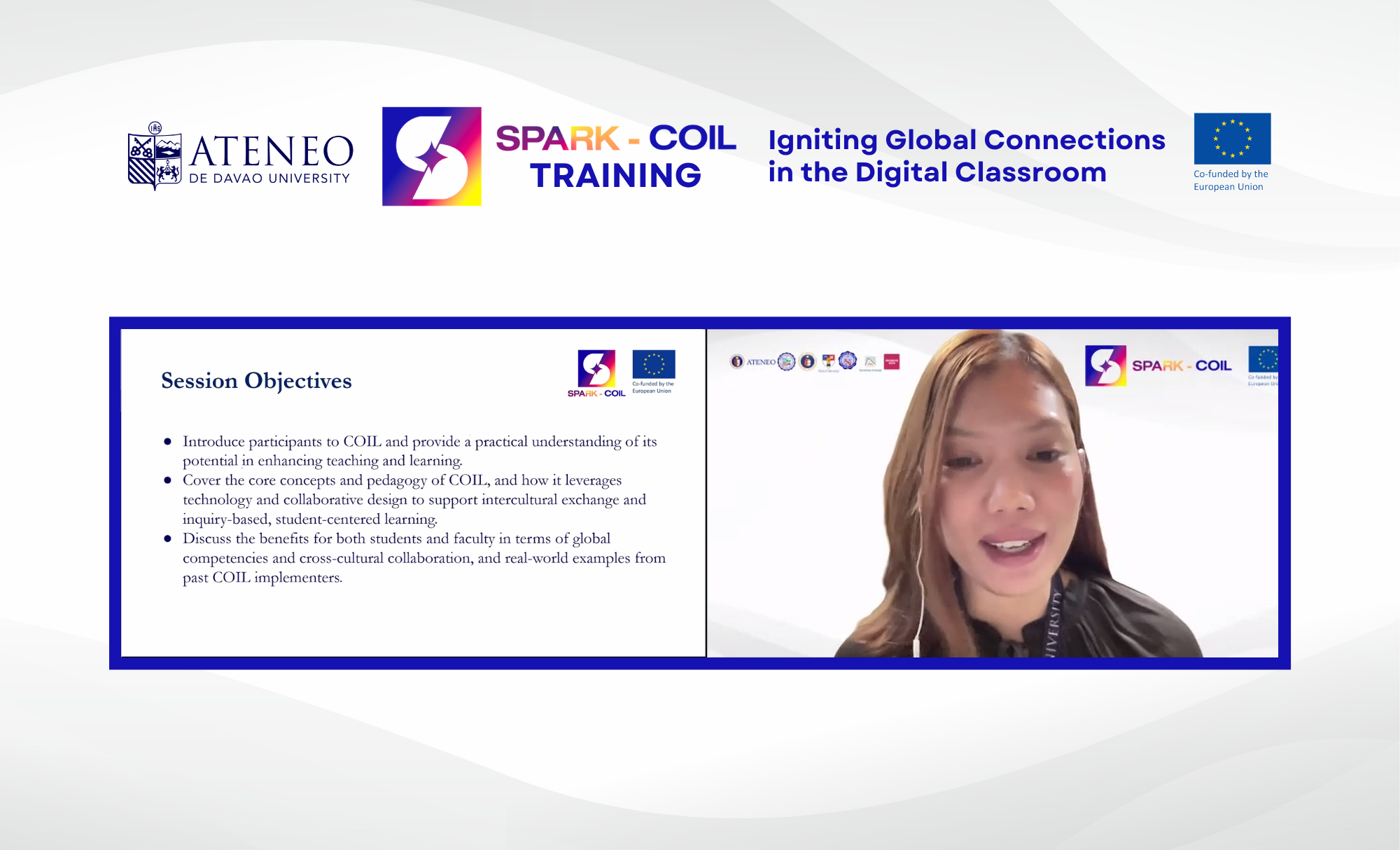
The first session, facilitated by Ms. Hannah M. Dela Peña, AIM Program Officer for Internationalization at Home, introduced participants to the fundamentals of COIL: its core concepts and pedagogy, how it leverages technology and collaborative design to support intercultural exchange and student-centered learning, and the benefits it offers both faculty and students in terms of global competencies and cross-cultural collaboration. Participants examined real-world examples from past COIL implementers and reflected on where COIL might fit within their own courses.
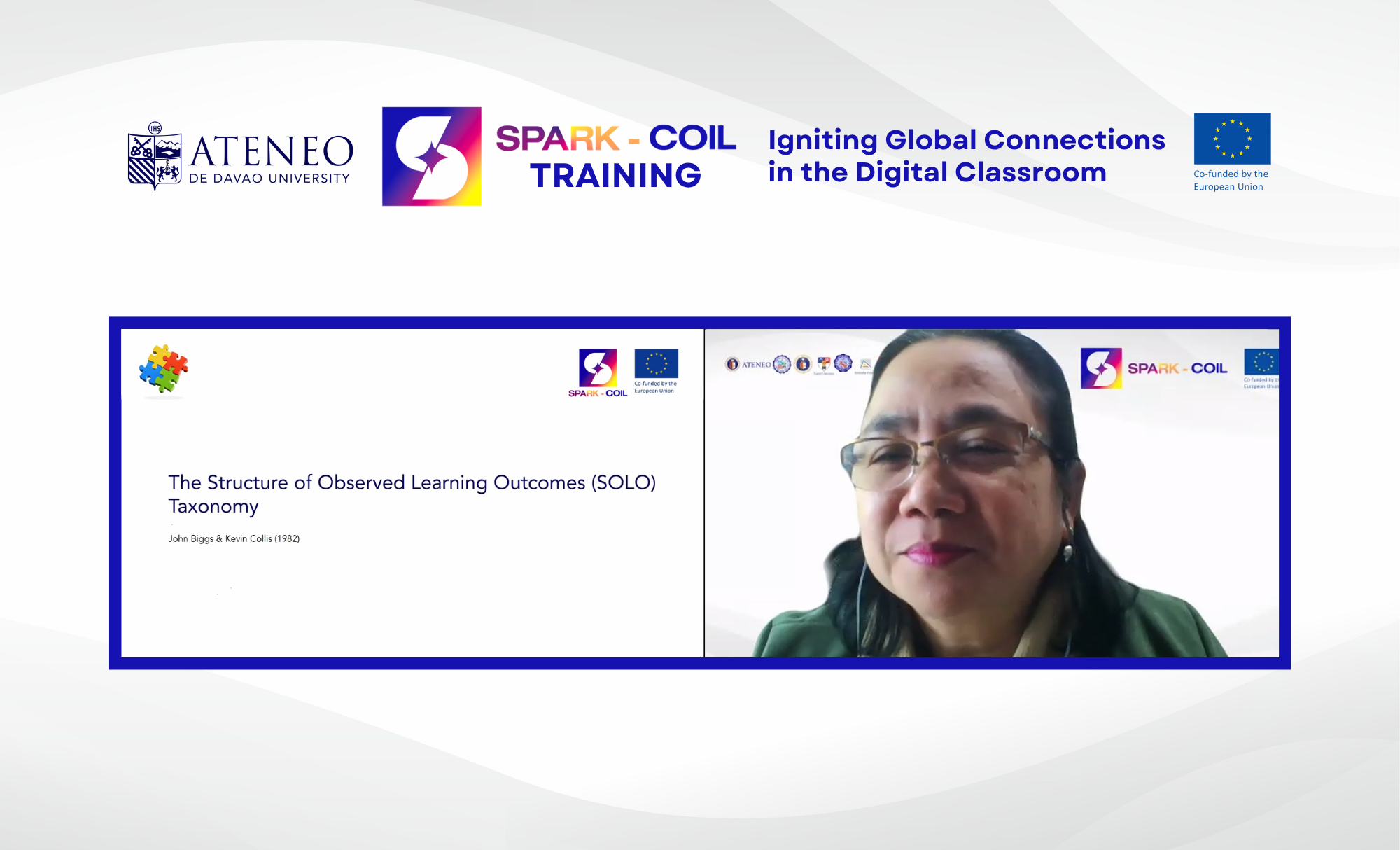
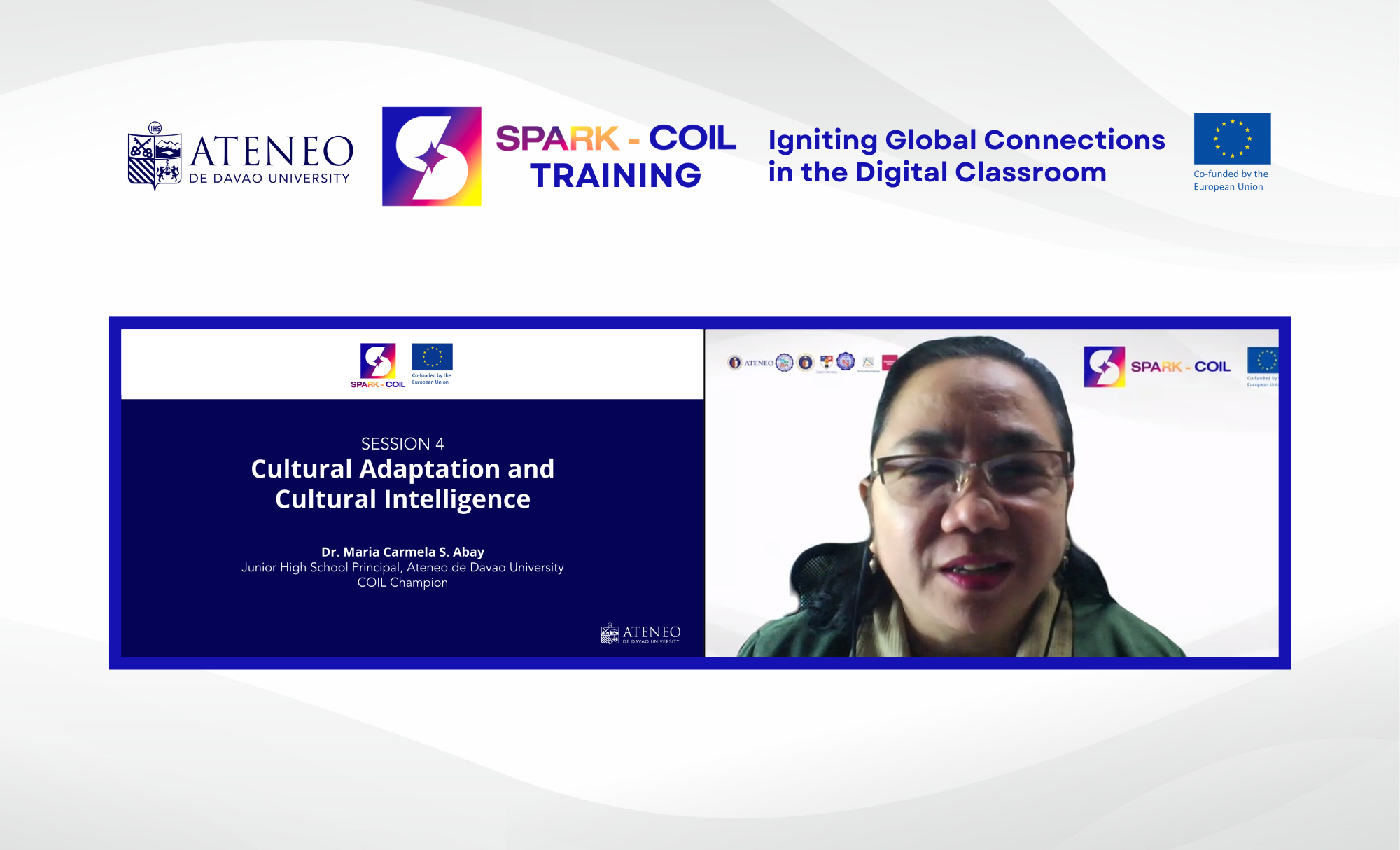
From there, the training moved into course design. Dr. Maria Carmela S. Abay, Principal of the Junior High School, guided participants through constructive alignment — the principle of ensuring that learning outcomes, teaching and learning activities, and assessments are coherently designed to work together. Using the SOLO Taxonomy as a framework, participants worked in breakout groups to begin drafting a COIL-integrated syllabus, producing the first output of the day.
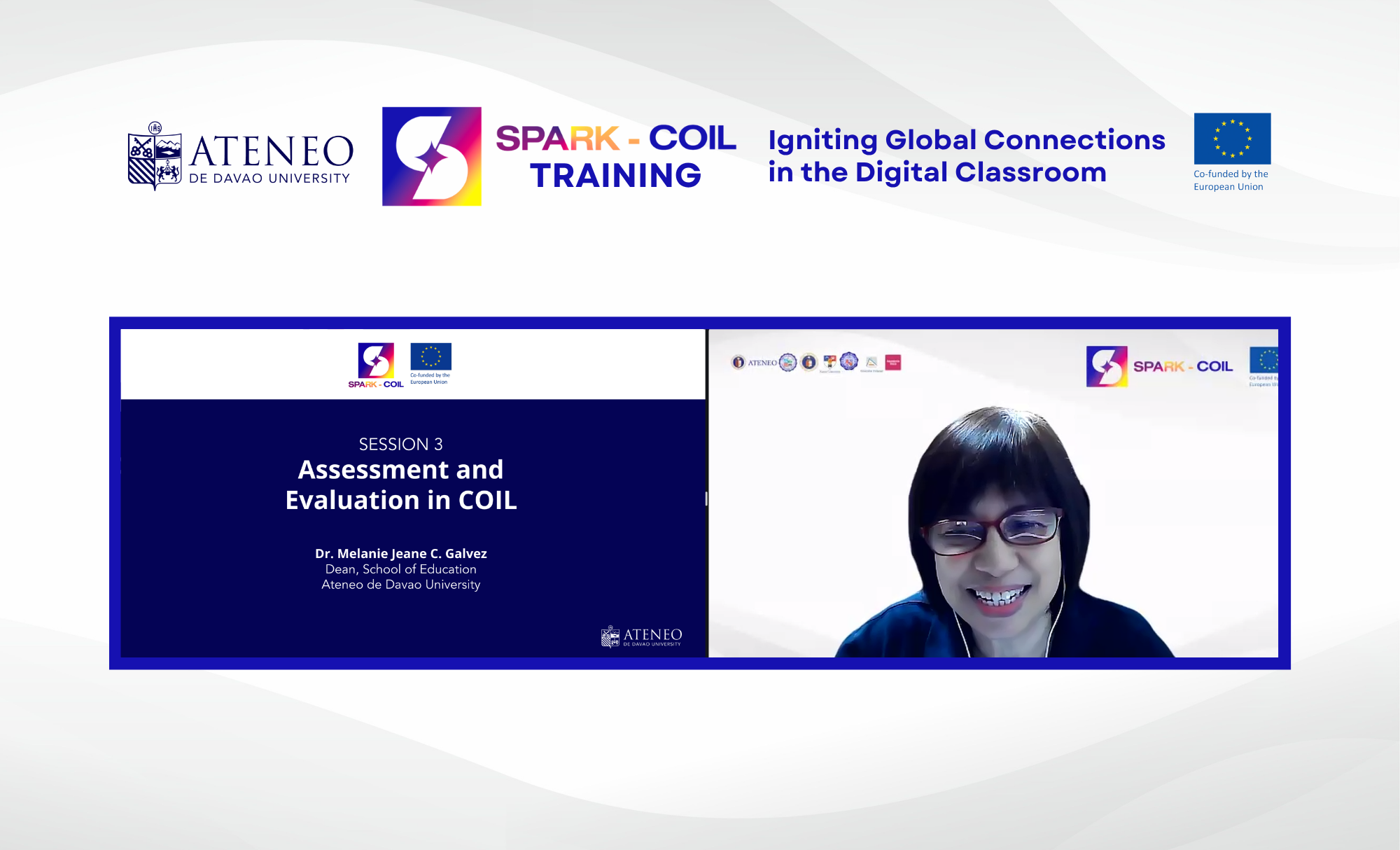
Dr. Melanie Jeane C. Galvez, Dean of the School of Education, facilitated the third session on assessment and evaluation in COIL. Participants examined how to design assessment tools (formative, summative, and authentic) appropriate for cross-institutional COIL settings. The participants then completed the COIL Activity Design Worksheet, mapping learning activities alongside their corresponding assessment strategies.
The afternoon resumed with a session on intercultural communication, competence, and sensitivity, again facilitated by Dr. Abay. The discussion moved beyond logistics and design into the human dimension of COIL, the cultural assumptions, communication patterns, and mindsets that shape how people learn together across borders. Participants reflected on their own cultural tendencies, analyzed cultural incidents, and identified practices for strengthening their cultural intelligence.
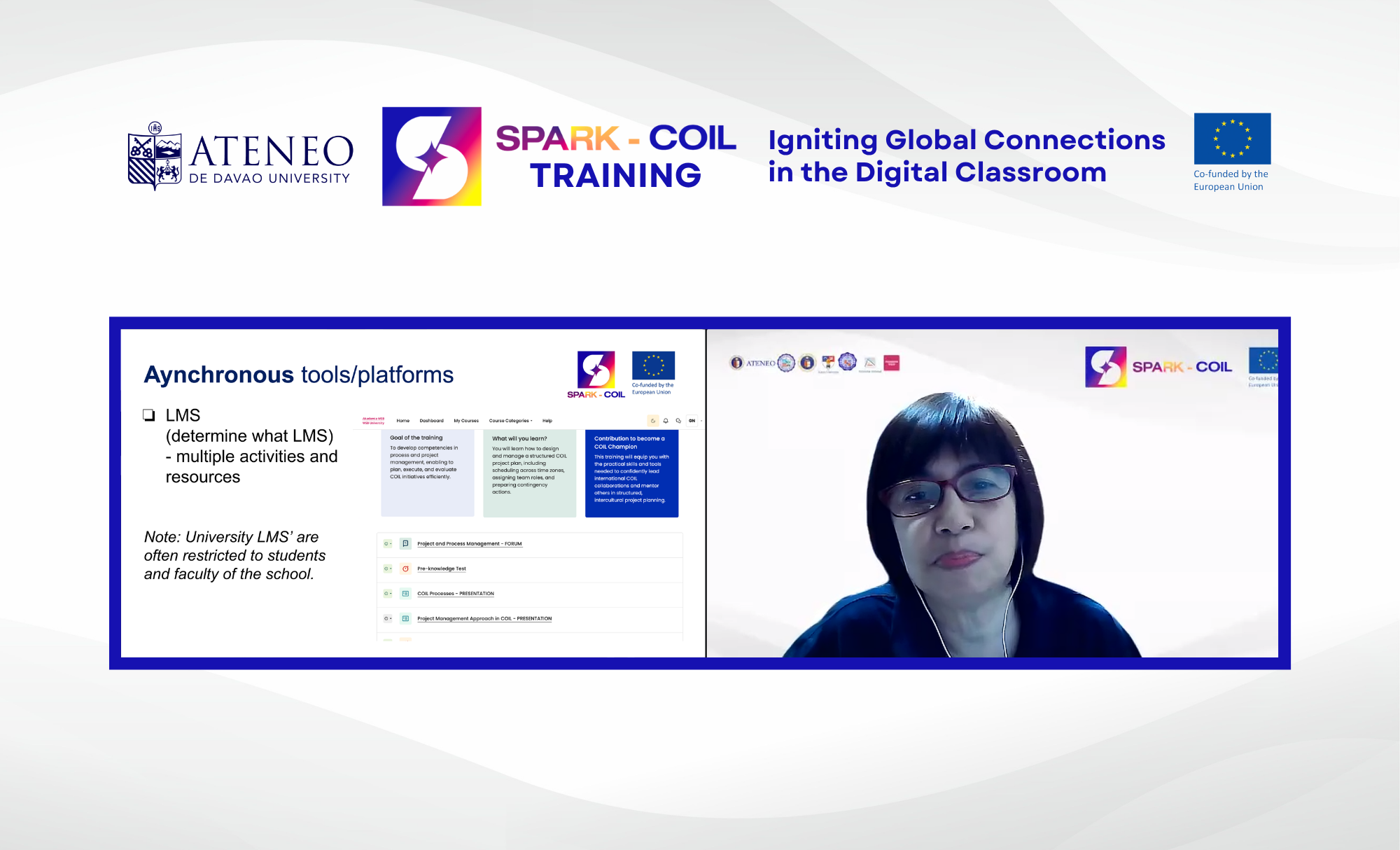
Dr. Galvez returned for the fifth session on educational technologies for COIL. Through a COIL technology quiz and group case-study analyses, participants evaluated digital tools and platforms for both synchronous and asynchronous collaboration, applying the criteria of equity, effectiveness, and ethics to determine what is appropriate for their own COIL contexts.
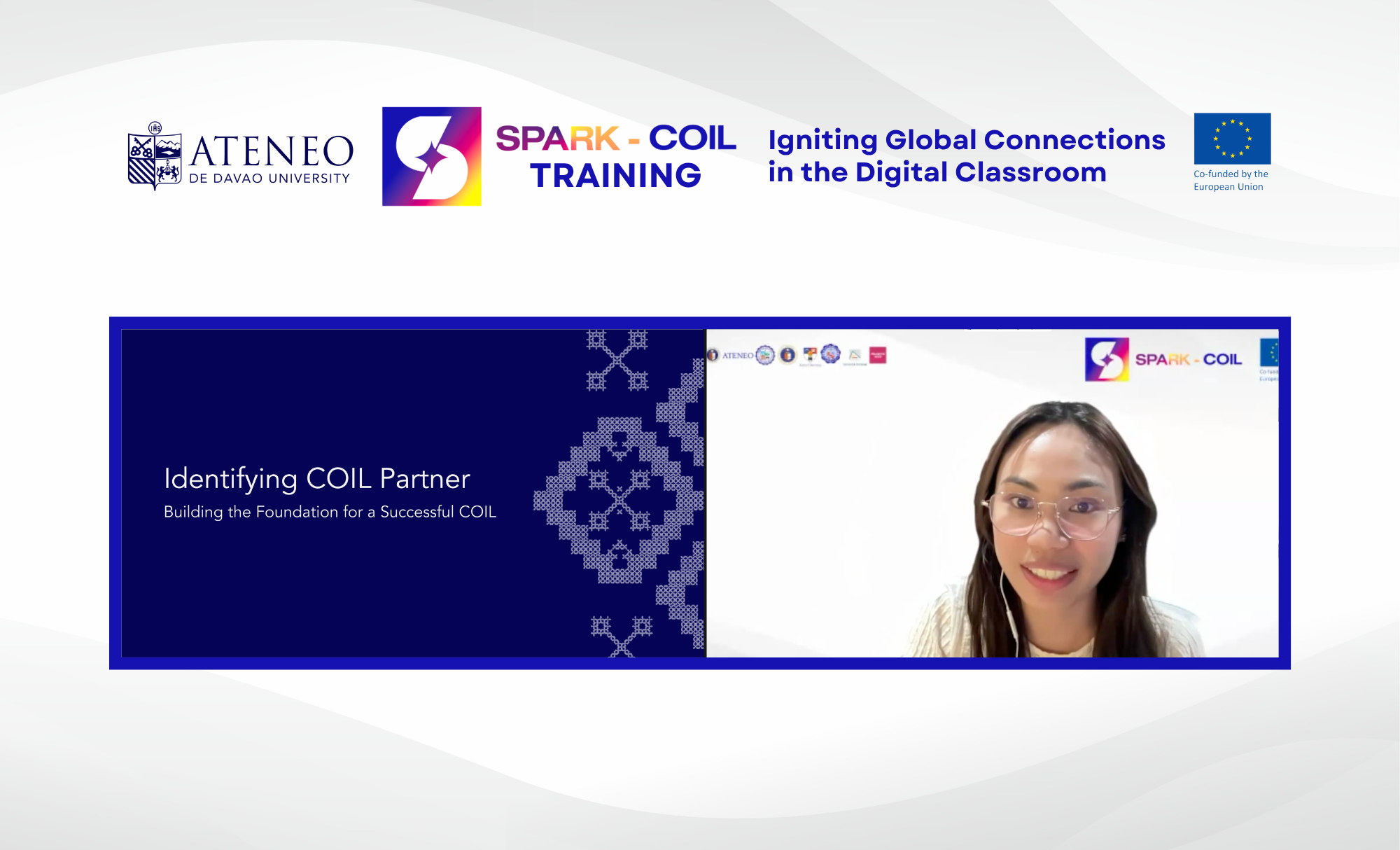
Ms. Lyd Ejira C. Ducusin, AIM Assistant Director, facilitated the sixth session on navigating the SPARK-COIL Platform, the digital infrastructure built specifically for the project to help faculty find and connect with compatible COIL partners from other institutions.
The training closed with the seventh session, facilitated by Ms. Dela Peña, on preparing for COIL implementation and overcoming challenges. Participants reflected on key institutional considerations, anticipated challenges involving schedules, language, technology, cultural differences, and student engagement, and proposed context-appropriate responses.
Participant reflections pointed to consistent themes across institutions and disciplines. The most recurring takeaway was the recognition that COIL makes international collaboration genuinely accessible — that meaningful global learning does not require a travel grant or a partner institution in the same time zone. It requires intentional design, cultural sensitivity, and the willingness to build a relationship with a colleague on the other side of a screen.
What the SPARK-COIL Training produced, beyond outputs and ratings, was a network of 155 faculty members from institutions in the Philippines, each of whom now holds a plan and a commitment to bring COIL into their own classroom.
About the SPARK-COIL Project
Strengthen and Promote Academic Agility, Resilience, and Knowledge Exchange through Collaborative Online International Learning (SPARK-COIL), an Erasmus+ Capacity Building for Higher Education (CBHE) project, marks a first for the Philippines. It is the only CBHE project proposed by a Philippine consortium, bringing together all five Ateneo Universities in the country: Ateneo de Davao University, Ateneo de Manila University (Project Lead), Ateneo de Naga University, Ateneo de Zamboanga University, and Xavier University-Ateneo de Cagayan. European partners include the University of Alicante (Spain) and WSB University (Poland).