
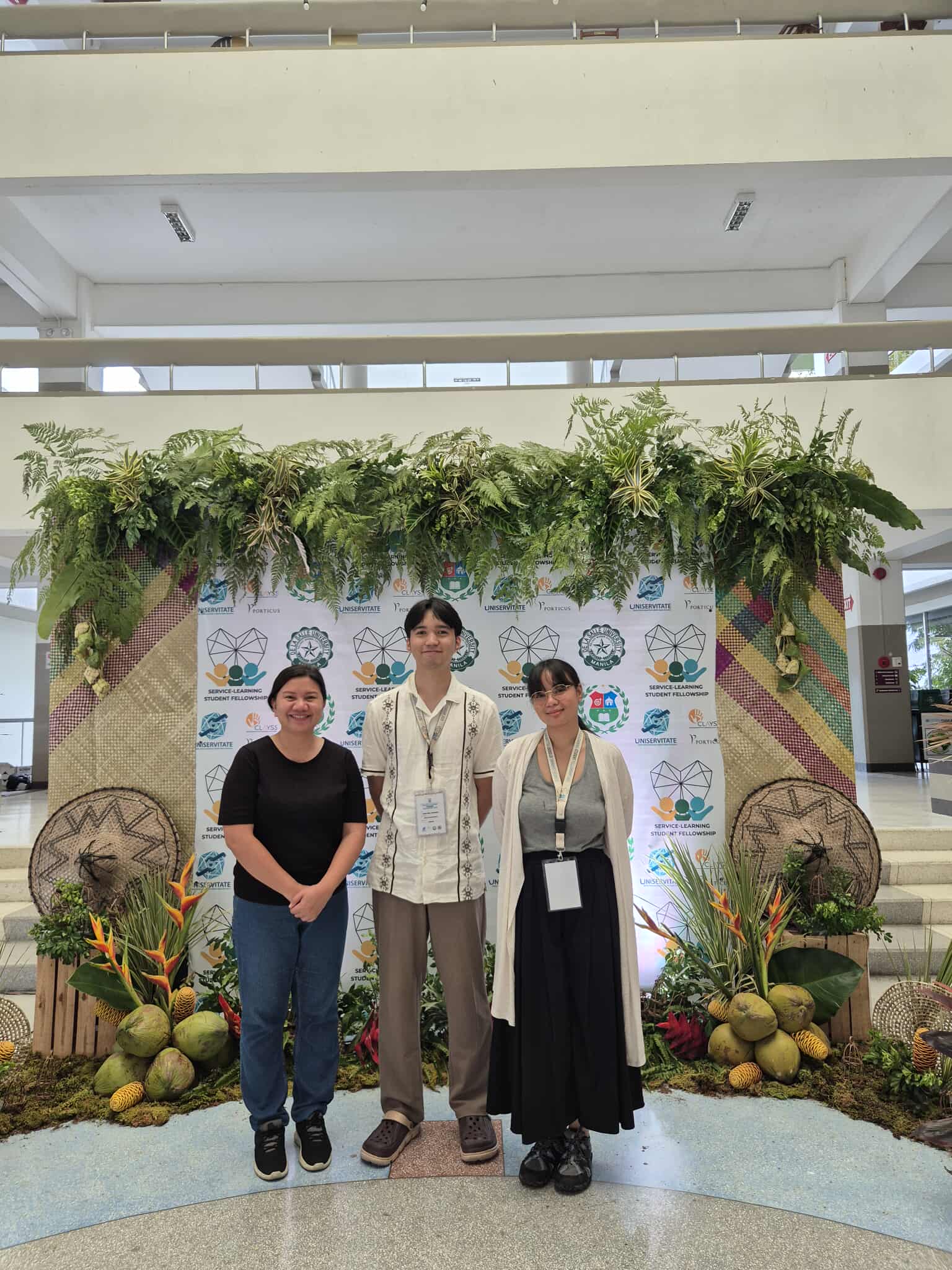
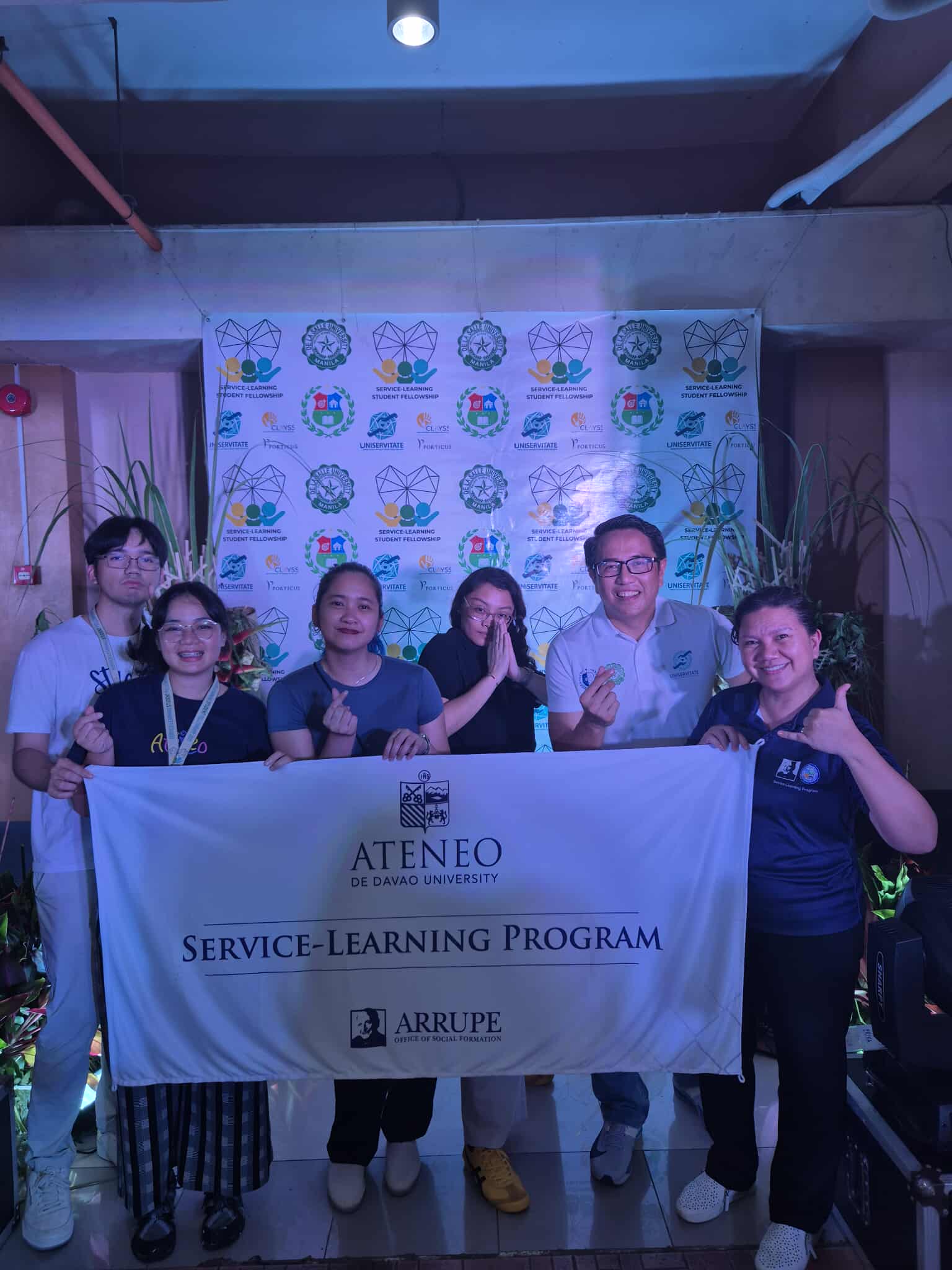
The Ateneo de Davao University attended the De La Salle University Uniservitate Asia and Oceania Regional Hub (UA&ORH) Service-Learning Student Fellowship Program (SLSF) 2025, hosted by the University of San Carlos, Cebu City, on 3-11 August 2025.
The weeklong formation program was designed to equip students with the skills, knowledge, and perspectives needed to advance Service-Learning (SL) initiatives within their respective institutions. Inspired by the Gospel metaphor of leaven, SLSF 2025 emphasizes the power of small, intentional actions to spark meaningful societal transformation. The program provided a space for understanding social realities, encouraged critical reflection, and strengthened collective commitment to action.
Eligibility for the fellowship required students to demonstrate not only academic competence but also character, leadership potential, interpersonal skills, and prior experience in service-learning. Participants are envisioned as ambassadors of SL, equipped to translate insights from the fellowship into S-L actions within their campuses.
The university was represented by Ms. Maharani Shaili S. Trazo, a 3rd Year AB Psychology student, Mr. Rexen Jhon F. Suaybaguio, a 3rd Year BS Chemistry student, and Ms. Melissa L. Barbon, Service-Learning Program Officer of the Arrupe Office of Social Formation.
“What struck me the most was how our diverse experiences, cultures, and stories converged into one shared purpose. I realized that genuine connections and collective action can be transformative. When our works are intentional and rooted in solidarity, they go beyond projects, they become meaningful encounters that strengthen both communities and ourselves,” Ms. Trazo shared.
Through a combination of interactive workshops, reflective sessions, and community immersion experiences, participants were prompted to examine their responsibilities as student leaders. The fellowship also sought to cultivate a network of advocates who can actively contribute to the development and implementation of service-learning programs in their home institutions.
“My SLSF journey has been a fulfilling experience, as I have met remarkable and distinctive leaders from various institutions. I have gained valuable insights and knowledge about how different academic disciplines can play a vital role in promoting the welfare of the community. Through the diversity and versatility of our undergraduate disciplines, I realized the significant impact of our projects and advocacies, which align with Catholic Social Teachings and the United Nations Sustainable Development Goals. Through this journey, I have discovered my full potential as a leader, developing essential skills such as active listening to engage in meaningful dialogue with my colleagues and foster a sense of community. With this, I aspire to be an inspiring catalyst, moving people’s hearts toward the value and importance of service-learning,” Mr. Suaybaguio reflected.
To complement the student learnings and reflection, Ms. Barbon, faculty companion, also shared the transformative impact of the fellowship.
“My journey as a faculty companion at the SLFS came as an unexpected yet enriching encounter. What I initially saw as a supportive role quickly unfolded into a transformative experience that inspired me to connect more deeply with fellow Service-Learning practitioners, the community, and our student leaders. The fellowship created spaces where we could learn from one another, empower each other, and embrace the call to focus not only on doing but also on being, being present in dialogue, grounded in reflection, and responsive through discerning action. Those moments reminded me that Service-Learning is not simply about learning objectives and service initiatives; it is about nurturing relationships that lead to meaningful and lasting impact,” Ms. Barbon said.
The expected outcomes of SLSF 2025 extend beyond personal growth. Students emerge with heightened awareness and advocacy for student-led SL initiatives, strengthened collaboration with faculty and administration, and enhanced capacity to apply academic learning to real-world contexts, including social justice, environmental stewardship, and community engagement.
“The fellowship is a vital platform for shaping discerning and adaptive leaders, as it challenges students to engage critically with communities, reflect deeply on their responsibilities, and translate learning into meaningful action that benefits others,” Dr. Apple Grace B. Ybañez, Service-Learning Program Coordinator of the Arrupe Office of Social Formation, remarked.
For these young leaders, the fellowship offered more than skills and knowledge; it provided a space for reflection, dialogue, and the forging of enduring commitments to community and justice.
“Now more than ever, young leaders must be immersed in formative spaces such as the SLSF, as they step into a world marked by uncertainty, injustice, and urgent social and ecological challenges. Beyond technical and professional competence, society needs leaders rooted in the Gospel and the Ignatian vision of faith that does justice, leaders who stand with the marginalized and vulnerable and who embody hope. In this way, these young leaders become our greatest gift to the world,” Ms. Shela Mae D. Jaso, Director of the Arrupe Office of Social Formation, said.
As the SLSF 2025 fellows return to their institutions, they carry with them not just experiences but a call to action to embody the leaven of change in their communities, inspiring others to engage in meaningful service and advocacy.
Article and Photos from the Arrupe Office of Social Formation
Published on